
For more than two millennia, the location of Alexandria on the Tigris remained one of the ancient world’s most intriguing archaeological mysteries. Founded by Alexander the Great in 324 B.C., the city was believed to have played a vital role in connecting Mesopotamia with distant trade networks, yet its precise location had been lost to history.
Now, researchers believe they have finally identified the long-lost port near Jebel Khayyaber in modern-day Iraq, uncovering evidence of a sophisticated waterfront complex that once stood at the heart of a thriving commercial hub.
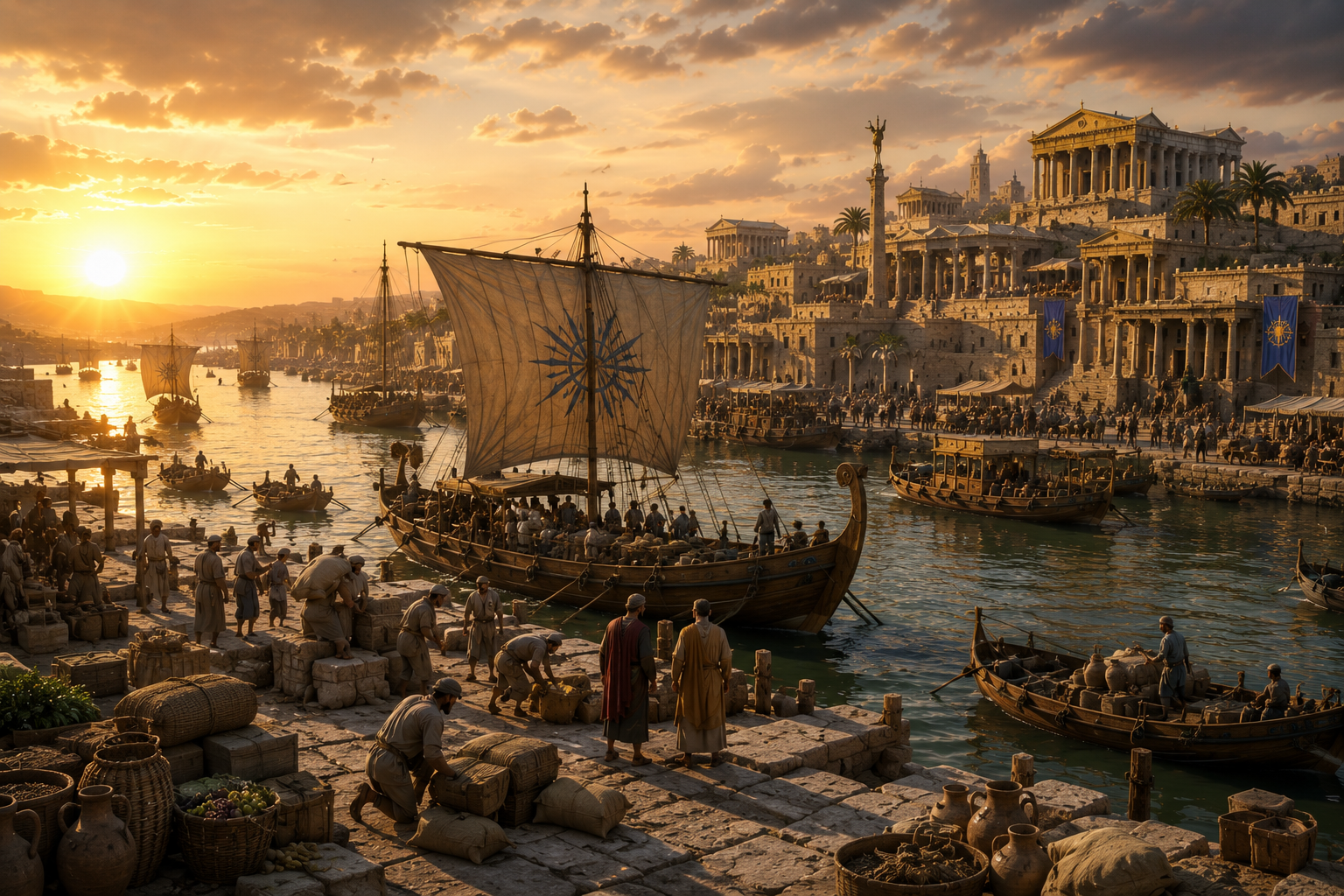
Archaeological investigations have revealed extensive dockyard infrastructure, including large harbor installations and engineered waterways designed to support substantial river traffic. These discoveries suggest the city was far more than a simple settlement. Instead, it appears to have functioned as a major gateway linking the ancient Near East with trade routes extending toward India and other distant regions.
At its height, Alexandria on the Tigris likely facilitated the movement of goods, people, technologies, and cultural ideas across vast distances. Merchants traveling through the city would have carried everything from luxury products and raw materials to knowledge and traditions, helping strengthen economic and cultural connections throughout Alexander’s expanding empire.
The newly uncovered infrastructure also demonstrates a remarkable level of engineering sophistication. Researchers say the harbor complex was carefully designed to manage river traffic and commercial activity on a large scale, highlighting the importance of waterways in the ancient economy. Long before modern shipping networks emerged, cities such as Alexandria on the Tigris relied on advanced maritime planning to maintain their influence and prosperity.
Beyond solving a centuries-old historical puzzle, the discovery offers valuable insight into how Hellenistic cities were planned and operated. The findings suggest that some ports of the ancient world rivaled the scale and complexity of the era’s most impressive urban centers, challenging assumptions about the capabilities of ancient infrastructure.
As excavations continue, researchers hope to learn more about the city’s role within Alexander’s empire and the wider network of trade routes that connected civilizations across Asia and the Middle East. Each new discovery is helping to reconstruct a chapter of history that remained hidden for more than two thousand years beneath the landscapes of modern Iraq.
The rediscovery of Alexandria on the Tigris not only sheds light on a lost city but also reveals the remarkable reach of ancient commerce, engineering, and cultural exchange in one of history’s most influential empires.